Pages

Monday, January 31, 2011

reflections on ecological design


The human being is a living creature. He is a part of  nature itself thus follows a defined and known life cycle; this lifecycle is  the sequence of day, month, year through out the different seasons .

The cycles of a man's life  consisting of birth, up-bringing, marriage, fatherhood, retirement, death is the complete path for one’s life leaving away for his children and his grandchildren to continue this journey.This is the definition of sustainability on the inidvidual level.


His successors will also draw other cycles for their life that connects with who they are and their personas but also connected to their fathers, family, tribe , communities, nation.

These multiple life cycles form  society and through them and their lives that the continuity of the historical, cultural aspects of a society is preserved.


These social cycles have been the foundation of anthropology in understanding how communities and societies are formed.
These interrelationships unveil  the invisible connections of the communities to the way it constructs meanings of the space  with time through its activities  
In designing our  plans and thinking about our development frameworks of design schemes, wether we are practitioners,
planners,policy makers, there needs to be more awarness to the mental plans of the city as a reflection of  these cycles .

The city becomes an ecosystem that through obeservation will reveal to us  the interaction of the different activities within it.

Sequence is  in the ecological cycles of earth, flora and fauna as well as in the sequence of the day (dawn, noon, sunset, late night) and the seasons ( winter , spring , summer, fall). 
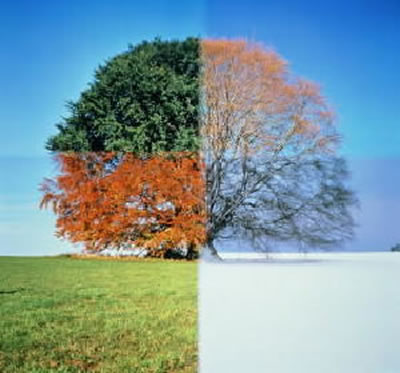
 Our urban ecosystem is connected to the wider ecosystem in nature and thus a bigger picture also needs to be considered when we talk about enviromental consideration - it is not only how much we are impacting the enviroment around us.

it is about also how the cycles inside our masterplans link to the bigger cycles of the context we are living in and to think about how we will reflect these nodes of linkages without making the plan too rigid that it can not allow for the community to retrace meanings and emabed it in the framework.
 
The human life cycle is centered on the individual by excellence .As a living creature, the human being moves, migrates, grows and changes and by consequence is not static.

So, the concept of human life is one that does not accept state in one location and one era. We need to under-stand this flexibility ,resilience and adaptibility as it becomes crucial to strive to it since it is at the core of sustainable development.

One must not confuse stillness and presence with statism because it is in stillness that one observes his achievement and contemplates its proceedings. 
Therefore, he must be present to do so meaning being alert and conscious .Consciousness in this sense is a faculty that one uses to optimize his cycle. Our plans become more tolerant in  providing the community places of stillness. 
places of meaningfull meditation as people strive not only to be engaged but also to disengage , not only to connect but also to disconnect.

 The human life is a journey through out space and time- it the series of small choices we make , which route we take, which district we live in - most of our choices are affected indirectly with the planning challenges and opportunities that our city provides.In this sense, the plan needs to be in line with the choices that the community is making on daily basis and call for also a reevaluation of these choices mitigating the one chosen by constraints and putting weight on opportunistic choices- ones that may enhance the experience of one's life inside the city.

This motion through out space and time begins from the moment the human being is reflected in his small travels such as his day going to work and leaving his home. Our plans need to account for the small journeys , how they will look like , what they will mean to the community.

So, Respecting cycles of activities, of flows,of seasons, of time and space would allow our plans might to last  more than the next generation. 

Saturday, January 29, 2011

landscape urbanism?new urbanism?smart growth? no-it is social media

density versus suburbs needs to be replaced by new social media and physical space

the debate goes on - landscape urbanism versus new urbanism.The interesting article published in Green building - in The Boston Globe (circulated on twitter through @space2place) gives insight how academia and professionals are in constant debate in what theoratical framework is more adequate to assist us in conceptualising urban space for the 22nd century. Two alternative views :the city as the place of flows and and as an ecological system that needs to be self sustainable or the diverse dense city that has a sense of place and community - Ecology and its sister theory of systems thinking versus Design and its sister theory of human rational reasoning

The dicussion focused on the alternative ways to tackle sustainability in its enviromental dimension within these two structures but missed to acknowledge the gradual rise of social sustainability driven by the proliferation of social networking .

not only sustainability - social media and crowdsourcing are dominating the new realities of the world we are living in-being human is expanding into tweeting,faceboking and sharing all sorts of stuff.


Viewing the change global governance, the impact that social media is having on our daily life and public sphere, there needs to be more debates wihtin the planning and design professions delaing in built enviroment to how we can benefit from the incredible potential that social media is giving us - on how connections and flows within the virtual sphere are forming? how these trajectories if analysed will feed back into design?thinking how our theoratical framework can accomodate for these new social dimension?how we can link up with infromation technology to advance sophisticated analysis tools that may help us understand and dissect the complexity of what cities are?

the ultimate success of being NEW ,urbanist or LANDSCAPE,urbanist or X-urbanist is about being able to accomodate for future realities now in the present and social media might become the dominant social reality

Monday, January 24, 2011

urban farming - new perspective

Should cities be self-sufficient? An argument for vertical ur... on Twitpic

Permeability - shaping how people move within cities


Permeability and crowdsourcing


Permeability is defined by the ability of the urban tissue to offer different routes, through and within it and measures opportunity for movement. Accessibility is a product measure of permeability; it is actually the product of the individual and the cadastral system the cadastral street patterns which is the layout of urban blocks shows the public space network and pinpoints pain areas that are blocking permeability in an urban area.

By defining the spaces that define the blocks ,we can analyze the nature of the tissue of the development.
By analyzing the tissue, we can understand better the relationship between the buildings and the space around them; this relationship will give us insight on their permeability.

Riba student winner award, restituted spaces ,Piotr Lesniak,University of Edinburgh Edinburgh UK
.

Old Souk,Dubai - http://www.dubaiwall.com/wp-content/uploads/2009/07/old_souk.jpg
Visual permeability is the availability of vistas, which are the views corridors in a tissue

Physical permeability represents the ability to seek different routes .
The measure of permeability is the degree of the grid texture; finer grid permits higher visual and physical permeability than coarser grids.


Symbolic permeability links essentially to the mental map of the city for its visitors and residents-
it is the amenability of its tissues for new imprints-
new crowd courcing techniques are rewriting the way permeability has been deisgned - the sheer volume of information relating to how citizens view their city permeability means that designers ,urban planners and policy makers may be more and more challenged - 

NYC launched a competition last year AND GUESS WHO WINS- A WAY FINDING APPLICATION -this gives a real indication that permeability is one of the most important quality that citizen look in cities because it is what helps moveand experience its spaces.would be interesting to see what types of urban information such application might tell us ?

Thursday, January 20, 2011

So What is Accessibility for Public Spaces?

Public space should be accessible to and used by all. (Arendt ,1958) It is particularly important, as Fraser (1990) and Hartley (1992) argue, that by claiming that public space as an embodiment of the public realm, it should include and foster interactions between different groups of the society. It should also offer excluded groups an opportunity to claim their rights of representation within the general community.

Demographic accessibility refers to the link between the production activities of the space and the output generated to the entity operating it whether it’s a public or private agency. The production activities,  such as retail, can be analyzed through the formal and informal programs that the implemented design generates as well as the one designed for [N1] [N2] .The inclusivity of the public space is established collectively through the diverse groups that uses is to engage in dialogue, debate and oppositional struggles. Key aspects of inclusive public space are its suitability for gatherings and encounters and its accessibility as an arena through which privacy is contested (Mitchell 1995)>Inclusive public space also encompasses the range of wage groups it serves and being served to. Demographic accessibility is important since it allows for various perceptions of the space to surface. In fact, (Ramon, 2004) advocates that variables such as age, sex, social class and ethnic identity affect the way urban life is perceived[N3] .

Physical accessibility is defined by the nature of the network that links the urban space to its surrounding urban fabric. The nature of these networks , highway or a pedestrian street, can change their role from  linkages to obstructions facilitating or preventing exchange processes and therefore the inclusivity as a quality of Publicness. “Environments, individuals and/or groups perceived either as threatening, comforting or inviting may affect entry into a public space” (Tiesdell and Oc, 1998: 648).

Symbolic accessibility can be distinguished by the degree of users’ engagement with the space in terms of active/passive engagement. The nature and the scope of activities incorporated in the public spaces can either allow or prevent the emergence of spaces of representation. The impact of the spaces of representation vary depending on the flexibility of such a representation. If it is narrow, it would only allow for representations of selected groups, if it is wide, it would allow for overlapping representations and increase its circle of influence beyond the development to the city scale.
This could even extend to national scale especially in extraordinary events such as the place de martyrs in Beirut in becoming an arena for multiple representations for Lebanon over the past two years. By outlasting mortal lives, it memorializes and thereby conveys a sense of history and society (Arendt 1958). Public spaces are defined in terms of the social encounter and exchange “where groups’ interest converge ’( Borja and Muxi ,2001;Glazer and Lilla 1987;Vernez Moodar 1992;Sorkin 1992;Tibbalds 1992;Worpole 1992). It reinforces the collective identity of the community (Valle Del,1997; Franck and Paxson,1989;Gehl,1987;Lynch 960;Whyte,1980;Kenstler 1993;Ruddock 1996). 
Reinforcing residents’ feelings of belonging to the city is attributed to the actions that can be carried out in public space which reflects an opportunity to urban justice (Borja, 2000).