Pages

Showing posts with label urban design. Show all posts

Monday, October 12, 2015

Smart urban design and smart cities

Cities as complex systems evolve over time ; some take millenea and others few decades..Time on a city scale is essentially spatial for each action in a city causes it to further expand geographically , to contract or to slowly wither..
As such, time is a dimension that has been researched by Jane Jacobs and other urban theorists as an essential factor in understanding cities 

In our age, time-space are compressing. We can have an in-depth two hour one to one comversation with a friend in asia while we are sitting with a group of our colleagues in our office in the states..

This dillution is impacting the urban space in cities for as these becone compress, a virtual city is created in addition to its spatial countrepart .That virtual city which Bill Mitchels  has prophetized  in his book "city of bits" is exponantially augmenting the actions occuring in real time and thus embedding  a multiplicity of meanings of the urban space.
Lately , a mall in dubai -Wafi Mall - hosted a fashion event as part of Dubai Fashion Week. The invites were sent virtually to attendees via social media creating a virtual community of the event that might outlast the event itself and thus augment the city social network beyound its urban fabric. Post event, tens of videos via social media captures the fashion show linking it to the mall. These videos were sent to hundreds of social media friends, felliw twitters or insta followers .The mental image of that space  - an empty court or corridor in wafi mall- is augmented to include these videos - that compresses space and time into three minutes , enough to alter our image of that space and feeds into our overall image of the city.
That is the challenge we face as urban designers - the challenge of grasping this multitude of representations into our proposals and our visions for our cities so they can actually benefit organically of that augmented reality .


Tuesday, November 12, 2013

ecological urban design

Ecological Urban Design
Nadine chahine
Ecological urban design is becoming a reality - a reality endorsed by one truth -our cities are an ecosystem operating in a larger eco-system. Once we understand and are aware of the intricate details of how these two ecosystems can complement each other, our cities - being the largest man made creations - will definitely heal from the alarming ecological footprint they are producing.

Figure 1-cities as urban ecosystems
Roads act as main way of transporting people and goods from the point of entry of a neighbourhood to an array of potential stop stations. The choice we human make when designing such a road needs to be influenced by the way our brain interpret and perceive these different possibilities. As designers, we are responsible for ensuring legibility- the capability of a city arteries(roads) to be understood intuitively . Although it is a design factor, it goes a long way in addressing efficiencies; the more direct and clear it is for our brains ( or GPS ) to guide us through the maze of points we need to go to ,the more possibilities for alternative transport mode can be thought of such as tram, monorail, biking tracks ,pedestrian zones. We tend to always analyse the pedestrian network as running parallel to roads through the inclusion of sidewalks sandwiched between the roads and the buildings .However, cities that have been resilient through thousands of years prove to us that our rationalisation of how we walk in cities is reductionist to our urban spaces. Walkable cities are legible .

Figure 2 walking is a choice that legible cities force us to take
Whether it is surface, multi story or basement parking, it plays a role in increasing accessibility to public transport points , pedestrian retail zones within the city ,civic spaces .accessibility as a design facto is highly linked to proximity of public transport  to public spaces and recreational spaces .it results in  vibrancy and animation of these spaces during all days and across different population segments ,
An example of ecological urban design is Downtown Silver Spring .The Development near transit stations is often compact and intense which gave the developer an opportunity to do Placemaking. The design of Civic open spaces make the development unique and fulfil an important need in compact, urban neighbourhoods.
 After residents in Silver Spring, Maryland, called for more open space, Montgomery County, Maryland, planners wrote guidelines for a Transit Oriented Development. A developer of a 27-acre project a short distance from the Metro stop responded by redeveloping the  suburban superblock around a series of public spaces by Bing Thom Architects and Sasaki Associates. The public spaces add to the urban centre distinctness and a sense of place .


Figure 3-Source:bettercities.net

Cities in the Gulf are part of a larger ecosystem – a coastal desert .The heat in urban spaces is caused through the reflection of the sunlight rays on the horizontal and vertical surfaces. This warming leads to an over use of  air conditioning - air cooling that consumes fossil fuels . In these days, our technologies are focused in either inventing materials that do not get affected by sun rays or cooling technologies to save on energy. What about wind? What about we work with the wind? Understanding the relationship between sun, wind and the orientation of our city fabric, streets and public space is important to manage efficiently the city as an ecosystem leading to efficiencies in energy consumption especially if it is applied on a district level and city level. Xeritown is a development in Dubai that have used wind in shaping its urban fabric-see figure 2

Figure 4-Xeritown  used wind to reduce heat by reorienting the fabric to benefit from cool breeze coming from the sea to the desert -source-Carboun.com

Greening the city is gaining momentum as a substantial resource efficiency initiative. There is always a pitfall in our cities to consider greening the city as just dedicating a big plot of land for a park .Actually, greening the cities now is expanding into urban ecosystem management through Urban agriculture and Biodiversity protection activities. We share with these city elements the oxygen and carbon - carbon being the enemy number one across the world when it comes to national sustainability campaigns. We look for ways to buy, share , transfer , calculate and resolve carbon footprint issues . What about plants? Cities are looking for various ways now to incorporate urban agriculture projects. In Dubai, Zaabeel park acts as an urban haven reducing heat and the impact of sheikh zayed highway high traffic activities carbon emissions. Zaabeel park also hosts a numerous of local adapted flora species that with time might become also a haven for local birds, insects and other fauna species. One of the interesting use of zaabeel park is storm water management due to its proximity to Dubai International Financial center .In case of wind storms, its palm trees might reduce the impacts of san erosion on the neighbourhoods in karama and bur dubai.


Figure 5-possible projects in urban agriculture
In ecology, urban ecosystems are not mere assemblages of their parts but are continually growing and changing along with their elements. The generative field of a living system extends into the environment and connects the two, for what is needed for the health of the entire system.  It is about the connected fabric of constantly evolving relationships between all living things.
 Ecological urban design, in face of the current pressures, adopts a holistic design approach that combines accessibility, walkability, local climate constraints, greening cities in order to produce places that are meaningful . Our spaces will turn into places that breath, inspire, uplift and even heal...

Sunday, May 12, 2013

One society .. One space

It was a sunny day .. As I stepped into my appointment , i could not but notice that I was in the middle of an urban acupuncture phenomenon ..
During the planning of Um Suqueim - the urban area where burj al Arab proudly stands - Dubai Municipality used the different urban scales of neighborhood , community and district to over lay its social infrastructure onto the subdivision plans grouping together the education , medical and convenience needs into one cluster .. The guidelines were published in the 1990's when dubai structural plan was formally approved and then reevaluated in the 2000's after the large scale urban developments springing in the city ..
These plots were silent for a long time .. Although school plots were the first to be built , the objective of providing a social infrastructure to the community could not be yet achieved ..
As I was stepping into my appointment at Aswaq, I realized that the vision that the planners back then were thinking of has materialized .. Next to Aswaq was a mosque and on its left was king's school .. You can see in the southern centers coffee shops and local small restaurans spilling ..
As I stepped into Aswaq gate , I saw an old prayer , one that was said in old Islamist era when one enters the souks .. In between Aswaqq ( souks in English ) and the actual souk in Arabic is one denominator , local community .. Aswaq brands were 100% Local brands from French bakery to the bookshop to the spa to the supermarket .. There is an air of informality , of spontaneity , of familiarity .. There was an air of being A Dubawian * and Dubawis ..
In old Islamic souks , the mosque was always next to them making it easy on people to leave their businesses and pray but also for Friday prayers crowd to spill over and regenerate the souk .. It was interesting to see that connection made thousand of years later ..
The one thing that I felt may need more attention on this coming- back- to - life- old- planning idea is the urban design aspect .. Between the contemporary design of king's school , the heritage inspired wind towers of Aswaq and the ornamental architecture of the mosque, the street perspective was kind of lost.. Urban design has been always a in- between no man Land between architecture and land use planning .. Design guidelines are always seen as discounting value by developers , restricting their creativity .. Many research done on urban neighborhood proved that adhering to flexible yet consistent guidelines actually increase real estate value because it is perceived as maintaining a long term sense of aesthetics and safeguarding the neighborhood spatial character and therefore identity . As we all strive to be distinct and unique , the urban space in between us suffers because its character leaks out trying to be everything for everyone .
As a social infrastructure project, guidelines might have been in fact a much needed dialogue between how as dubawians *and local dubawis we aspire our community values to be manifested architecturally.. Small focus groups might have been ideal to pinpoint objectives and then the technical consulting team might have deduced guidelines based on multiple residents sessions and their aspirations on how the area will develop..
Guided participatory sessions might have lead to a journey of discovery .. An interesting ride into um suqueim past , present and future aspirations as a community of transient , permanent and resident dubawians and Dubawis also .. It may also be an opportunity for Aswaq to relate more strongly to the community it serves by emotionally investing in building trust and communication ..
What is a relationship but trust and communication ?
So as I was leaving the parking , my head was boiling with sketches and bursting with this urban dilemma that while doing our best to anchor ourselves in values such as heritage , authenticity , creativity, we need to foresee The denominator in all - the space itself in the perceived and the perceiver .. In the experienced and the experiencer ..
We are the space and in return , the space becomes us as we build around it meanings and therefore character.. Urban character ..


PS I invented Dubawian to name residents of dubai emirate and Dubawis the citizens of dubai emirate


Wednesday, February 6, 2013

What about urban design ?

As the property development became more obsessed with the investment analysis ratios and crunching. The bottom line numbers , we lost the spontaneity of urban design being essentially a creative process
Urban designers in mature property markets became the tool to prepare ready made streets sections , ready made urban form , ready made urban typologies that enables the developer to get the yield - of course financial yield
This short term thinking defies the current research whereby more and more people chooses communities that make them enjoy a sense of place - place being the holistic experience which the space attributes and values convey...
One time , I was asked to produce in one day a sketch for an urban square in order for the development team to plug the numbers in their sheet and calculate the value driven from these design changes .. Everything else became secondary although the main and essential meaning of the square is about the sense of place and the meaning it conveys ...
Urban design is a creative activity ... Creativity means leaving the known to venture into the unique and original ..
This essentially means an industry who has the guts to embrace the original .. Do we have what it takes for that ?

Sunday, August 28, 2011

Cityscape awards architecture 2011

Over the last few years the Cityscape Awards have developed into the world’s premier Architectural Awards for the emerging markets.
This year, being  part of the judging committee,i got the chance to view  more than 120 entries in 15 categories spanning from residential to community planning - islamic architecture to enviromental design.

The entries displayed creativity, innovation, efficiency and enviromental sensitivities .It was a difficult process especially that the entries all had eye on innovation, creativity but also functionality. Most of the entries showed high interest in customising their concepts to the context they are working with especially when it comes to street level. Urban design has become a major driver in shaping the architectural elements of the building . The other main trend that i have noticed in the entries is the use of energy efficiency systems to improve the functionality of the building- Sustainability is no longer a trend - there is an increasing demand on it as an essential criteria of design evaluation by clients.

i was highly impressed by two categories:
1- the young architects category- the entries showed an edgy approach that brings optimism in the pool of futureregional  talent we have-  it also showed an increasing blurring of boundaries between architecture, urban design and planning which means that our educational systems need to be redesigned to tackle it more.
2- islamic architecture- although i have heard many debates on the qualifiers of islamic architecture, i have to say that the entries showed a transformation of the way islamic architecture is viewed- Some of the entries transcended the past meanings and presented it under a new light.

Design Awards have always been an effective tools to spread awarness over the importance of quality in designing of our built enviroment and more than ever, it represents an incentive to gain recognition.
It recognises Architects and community planners and their projects that have shown outstanding designs, performance, vision and achievement in key areas of architecture.thething about design is that when it is done with a holistic approach , it benefits on many dimensions the context and that is where the categories in the awards provide a direction on which one can perceive the value of the project For example a good residential project might be as beneficial to the community and a well designed mixed use conplex might contribute to the local tourism.

the shortlist is out and you can check it on below link 

just click to view  the Cityscape Awards shortlist 2011

I am looking forward for a heated deliberation .

Monday, January 31, 2011

reflections on ecological design


The human being is a living creature. He is a part of  nature itself thus follows a defined and known life cycle; this lifecycle is  the sequence of day, month, year through out the different seasons .

The cycles of a man's life  consisting of birth, up-bringing, marriage, fatherhood, retirement, death is the complete path for one’s life leaving away for his children and his grandchildren to continue this journey.This is the definition of sustainability on the inidvidual level.


His successors will also draw other cycles for their life that connects with who they are and their personas but also connected to their fathers, family, tribe , communities, nation.

These multiple life cycles form  society and through them and their lives that the continuity of the historical, cultural aspects of a society is preserved.


These social cycles have been the foundation of anthropology in understanding how communities and societies are formed.
These interrelationships unveil  the invisible connections of the communities to the way it constructs meanings of the space  with time through its activities  
In designing our  plans and thinking about our development frameworks of design schemes, wether we are practitioners,
planners,policy makers, there needs to be more awarness to the mental plans of the city as a reflection of  these cycles .

The city becomes an ecosystem that through obeservation will reveal to us  the interaction of the different activities within it.

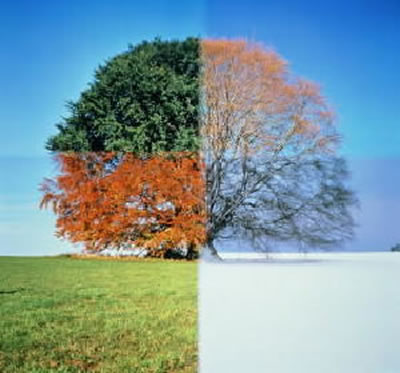
Sequence is  in the ecological cycles of earth, flora and fauna as well as in the sequence of the day (dawn, noon, sunset, late night) and the seasons ( winter , spring , summer, fall). 

 Our urban ecosystem is connected to the wider ecosystem in nature and thus a bigger picture also needs to be considered when we talk about enviromental consideration - it is not only how much we are impacting the enviroment around us.

it is about also how the cycles inside our masterplans link to the bigger cycles of the context we are living in and to think about how we will reflect these nodes of linkages without making the plan too rigid that it can not allow for the community to retrace meanings and emabed it in the framework.
 
The human life cycle is centered on the individual by excellence .As a living creature, the human being moves, migrates, grows and changes and by consequence is not static.

So, the concept of human life is one that does not accept state in one location and one era. We need to under-stand this flexibility ,resilience and adaptibility as it becomes crucial to strive to it since it is at the core of sustainable development.

One must not confuse stillness and presence with statism because it is in stillness that one observes his achievement and contemplates its proceedings. 
Therefore, he must be present to do so meaning being alert and conscious .Consciousness in this sense is a faculty that one uses to optimize his cycle. Our plans become more tolerant in  providing the community places of stillness. 
places of meaningfull meditation as people strive not only to be engaged but also to disengage , not only to connect but also to disconnect.

 The human life is a journey through out space and time- it the series of small choices we make , which route we take, which district we live in - most of our choices are affected indirectly with the planning challenges and opportunities that our city provides.In this sense, the plan needs to be in line with the choices that the community is making on daily basis and call for also a reevaluation of these choices mitigating the one chosen by constraints and putting weight on opportunistic choices- ones that may enhance the experience of one's life inside the city.

This motion through out space and time begins from the moment the human being is reflected in his small travels such as his day going to work and leaving his home. Our plans need to account for the small journeys , how they will look like , what they will mean to the community.

So, Respecting cycles of activities, of flows,of seasons, of time and space would allow our plans might to last  more than the next generation. 

Monday, January 24, 2011

Permeability - shaping how people move within cities


Permeability and crowdsourcing


Permeability is defined by the ability of the urban tissue to offer different routes, through and within it and measures opportunity for movement. Accessibility is a product measure of permeability; it is actually the product of the individual and the cadastral system the cadastral street patterns which is the layout of urban blocks shows the public space network and pinpoints pain areas that are blocking permeability in an urban area.

By defining the spaces that define the blocks ,we can analyze the nature of the tissue of the development.
By analyzing the tissue, we can understand better the relationship between the buildings and the space around them; this relationship will give us insight on their permeability.

Riba student winner award, restituted spaces ,Piotr Lesniak,University of Edinburgh Edinburgh UK
.

Old Souk,Dubai - http://www.dubaiwall.com/wp-content/uploads/2009/07/old_souk.jpg
Visual permeability is the availability of vistas, which are the views corridors in a tissue

Physical permeability represents the ability to seek different routes .
The measure of permeability is the degree of the grid texture; finer grid permits higher visual and physical permeability than coarser grids.


Symbolic permeability links essentially to the mental map of the city for its visitors and residents-
it is the amenability of its tissues for new imprints-
new crowd courcing techniques are rewriting the way permeability has been deisgned - the sheer volume of information relating to how citizens view their city permeability means that designers ,urban planners and policy makers may be more and more challenged - 

NYC launched a competition last year AND GUESS WHO WINS- A WAY FINDING APPLICATION -this gives a real indication that permeability is one of the most important quality that citizen look in cities because it is what helps moveand experience its spaces.would be interesting to see what types of urban information such application might tell us ?

Thursday, January 20, 2011

So What is Accessibility for Public Spaces?

Public space should be accessible to and used by all. (Arendt ,1958) It is particularly important, as Fraser (1990) and Hartley (1992) argue, that by claiming that public space as an embodiment of the public realm, it should include and foster interactions between different groups of the society. It should also offer excluded groups an opportunity to claim their rights of representation within the general community.

Demographic accessibility refers to the link between the production activities of the space and the output generated to the entity operating it whether it’s a public or private agency. The production activities,  such as retail, can be analyzed through the formal and informal programs that the implemented design generates as well as the one designed for [N1] [N2] .The inclusivity of the public space is established collectively through the diverse groups that uses is to engage in dialogue, debate and oppositional struggles. Key aspects of inclusive public space are its suitability for gatherings and encounters and its accessibility as an arena through which privacy is contested (Mitchell 1995)>Inclusive public space also encompasses the range of wage groups it serves and being served to. Demographic accessibility is important since it allows for various perceptions of the space to surface. In fact, (Ramon, 2004) advocates that variables such as age, sex, social class and ethnic identity affect the way urban life is perceived[N3] .

Physical accessibility is defined by the nature of the network that links the urban space to its surrounding urban fabric. The nature of these networks , highway or a pedestrian street, can change their role from  linkages to obstructions facilitating or preventing exchange processes and therefore the inclusivity as a quality of Publicness. “Environments, individuals and/or groups perceived either as threatening, comforting or inviting may affect entry into a public space” (Tiesdell and Oc, 1998: 648).

Symbolic accessibility can be distinguished by the degree of users’ engagement with the space in terms of active/passive engagement. The nature and the scope of activities incorporated in the public spaces can either allow or prevent the emergence of spaces of representation. The impact of the spaces of representation vary depending on the flexibility of such a representation. If it is narrow, it would only allow for representations of selected groups, if it is wide, it would allow for overlapping representations and increase its circle of influence beyond the development to the city scale.
This could even extend to national scale especially in extraordinary events such as the place de martyrs in Beirut in becoming an arena for multiple representations for Lebanon over the past two years. By outlasting mortal lives, it memorializes and thereby conveys a sense of history and society (Arendt 1958). Public spaces are defined in terms of the social encounter and exchange “where groups’ interest converge ’( Borja and Muxi ,2001;Glazer and Lilla 1987;Vernez Moodar 1992;Sorkin 1992;Tibbalds 1992;Worpole 1992). It reinforces the collective identity of the community (Valle Del,1997; Franck and Paxson,1989;Gehl,1987;Lynch 960;Whyte,1980;Kenstler 1993;Ruddock 1996). 
Reinforcing residents’ feelings of belonging to the city is attributed to the actions that can be carried out in public space which reflects an opportunity to urban justice (Borja, 2000).


Monday, January 10, 2011

why research on public space is now more important for policy makers?


In an era of globalization, the role of public policy makers and urban designers is increasingly concerned in marketing their cities by advocating that they are integrated into the global map. Technology, and most precisely the upgrade of information technology sector, becomes essential in marketing the urban space as being connected with the global flows of capital, people (Porter et al. 2000 cited in Marshall 2003:18).
Subsequently, global urban projects described as  large scale developments built to accommodate high-end functions, are  increasingly initiated such as Cyberport (Hong Kong) ,Tokyo Rainbow Town, Muang Thong Thani(Thailand), Luijazui and the  Pudong Redevelopment Area (Shanghai),New Downtown(Singapore), Putrajaya (Malaysia) (Olds 1995,Marshall 2003).
 However, under the pressure of economic development and global agenda, Public spaces are increasingly privatized and purified   (Graham and Aurigi   1997, Graham and Marvin 2001).
As a result, investigating interventions that aim at providing inclusive public space in the context of a global agenda will provide linkages in between the growing urban research on the privatization of public space and the actual urban design practices and products.

Therefore, the study of possible urban interventions targeting the public space of suburban developments spurred by the global agenda is important.
These interventions need to be based on a conceptual framework that will synthesize the design attributes of  public space with the development goals set by the global agenda.
In particular, there needs to be a more thorough exploration on  how the purification and privatization of public space can be reversed through urban interventions that can benefit from the recent growing research on retrofitting suburbs that share the same attributes of global projects .
In addition, the analysis needs to take into consideration how public space were conceived  in the context and the reasons behind the particular design and policy decisions which lead to the particular characteristics of these spaces.
Importance of  global projects
Research on Globalization developed intensively (e.g. Castells 1989; Harvey 1989; Giddens 1990; King 1993; Sassen 1991) during the last decade although it is believed to start during 1970’s (Waller stein 1974; Castells 1989; Harvey 1989; Giddens 1990; King 1993; Sassen 1991).
However, the focus of the research was on mainly economic and political processes that generalized globalization debate into abstract forces affecting the urban space. Global projects are emerging concepts that deal with the specificities of the urban space being remodeled to respond to global agenda. As such, they offer an opportunity to investigate specific articulations in space and time.

Urban research on globalization based on a locale is needed as it provides new directions in term of being more empirical and specific and leading to practical interpretation of theoutput of the design process .
 
§  Importance of the study  public space
Although privatization of public space has been researched on since 1980, the research focused more in identifying the problems and ills of such a privatized ’’public space’’.
Starting from a more activist perspective, there needs to be more  thinking on interventions that capitalize on existing research and address the possibility of the success of such interventions within the global context.
The  approach will be essentially more multidisciplinary as public space is defined by integrating multiple layers in terms of anthropology than sociology, urban interventions formulated shall offer the opportunity of a holistic integrative approach