check out the presentation
Saturday, February 19, 2011

Tuesday, February 15, 2011
Tuesday, February 8, 2011
urbanism might be the answer for climate change
''The problem with the techological approach is that it’s single-minded and it misses out on all the co-benefits that come from good urbanism. The reason urbanism is such a cost effective solution is that it solves more than the carbon problem. It creates a broader range of housing, which is really needed now in America; with the real estate crash we all understand that a big part of that was driven by the fact that we overbuilt one market segment (l earge lot, single family) to the point where it lost value in a dramatic way.''
Interview with Peter Calthorpe, Author of “Urbanism in the Age of Climate Change” | Sustainable Cities Collective
Interview with Peter Calthorpe, Author of “Urbanism in the Age of Climate Change” | Sustainable Cities Collective
Monday, January 31, 2011
reflections on ecological design

The human being is a living creature. He is a part of nature itself thus follows a defined and known life cycle; this lifecycle is
the sequence of day, month, year through out the different seasons .
The cycles of a man's life consisting of birth, up-bringing,
marriage, fatherhood, retirement, death is the complete path for one’s life
leaving away for his children and his grandchildren to continue this journey.This is the definition of sustainability on the inidvidual level.
His
successors will also draw other cycles for their life that connects with who
they are and their personas but also connected to their fathers, family, tribe ,
communities, nation.
These multiple life cycles form society and through them
and their lives that the continuity of the historical, cultural aspects of a
society is preserved.
These social cycles have been the foundation of anthropology in understanding how communities and societies are formed.
These
interrelationships unveil the invisible connections of the communities
to the way it constructs meanings of the space with time through its
activities
 In designing our plans and thinking about our development frameworks of design schemes, wether we are practitioners,
planners,policy makers, there needs to be more awarness to the mental plans of the city as a reflection of these cycles .
The city becomes an ecosystem that through obeservation will reveal to us the interaction of the different activities within it.
Sequence is in the
ecological cycles of earth, flora and fauna as well as in the sequence of the
day (dawn, noon, sunset, late night) and the seasons ( winter , spring , summer,
fall).
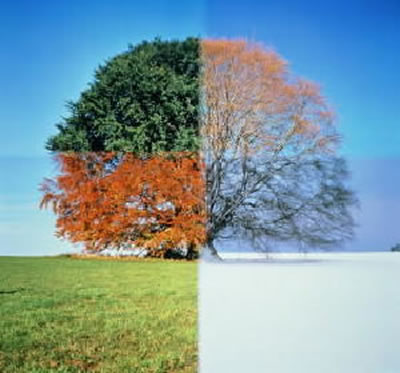
Our urban ecosystem is connected to the wider ecosystem in nature and thus a bigger picture also needs to be considered when we talk about enviromental consideration - it is not only how much we are impacting the enviroment around us.
it is about also how the cycles inside our masterplans link to the bigger cycles of the context we are living in and to think about how we will reflect these nodes of linkages without making the plan too rigid that it can not allow for the community to retrace meanings and emabed it in the framework.

The human life cycle is centered on the
individual by excellence .As a living creature, the human being moves, migrates,
grows and changes and by consequence is not static.
So, the concept of human life is one that does not accept state in one location and one era. We need to under-stand this flexibility ,resilience and adaptibility as it becomes crucial to strive to it since it is at the core of sustainable development.

One must not confuse stillness and presence
with statism because it is in stillness that one observes his achievement and
contemplates its proceedings.
Therefore, he must be present to do so meaning
being alert and conscious .Consciousness in this sense is a faculty that one
uses to optimize his cycle. Our plans become more tolerant in providing the community places of stillness.
places of meaningfull meditation as people strive not only to be engaged but also to disengage , not only to connect but also to disconnect.
The human life is a
journey through out space and time- it the series of small choices we make , which route we take, which district we live in - most of our choices are affected indirectly with the planning challenges and opportunities that our city provides.In this sense, the plan needs to be in line with the choices that the community is making on daily basis and call for also a reevaluation of these choices mitigating the one chosen by constraints and putting weight on opportunistic choices- ones that may enhance the experience of one's life inside the city.
This motion through out space and time begins
from the moment the human being is reflected in his small travels such as his
day going to work and leaving his home. Our plans need to account for the small journeys , how they will look like , what they will mean to the community.

So, Respecting cycles of activities, of flows,of seasons, of time and space would allow our plans might to last more than the next generation.
Saturday, January 29, 2011
landscape urbanism?new urbanism?smart growth? no-it is social media
density versus suburbs needs to be replaced by new social media and physical space
the debate goes on - landscape urbanism versus new urbanism.The interesting article published in Green building - in The Boston Globe (circulated on twitter through @space2place) gives insight how academia and professionals are in constant debate in what theoratical framework is more adequate to assist us in conceptualising urban space for the 22nd century. Two alternative views :the city as the place of flows and and as an ecological system that needs to be self sustainable or the diverse dense city that has a sense of place and community - Ecology and its sister theory of systems thinking versus Design and its sister theory of human rational reasoning
The dicussion focused on the alternative ways to tackle sustainability in its enviromental dimension within these two structures but missed to acknowledge the gradual rise of social sustainability driven by the proliferation of social networking .
not only sustainability - social media and crowdsourcing are dominating the new realities of the world we are living in-being human is expanding into tweeting,faceboking and sharing all sorts of stuff.
Viewing the change global governance, the impact that social media is having on our daily life and public sphere, there needs to be more debates wihtin the planning and design professions delaing in built enviroment to how we can benefit from the incredible potential that social media is giving us - on how connections and flows within the virtual sphere are forming? how these trajectories if analysed will feed back into design?thinking how our theoratical framework can accomodate for these new social dimension?how we can link up with infromation technology to advance sophisticated analysis tools that may help us understand and dissect the complexity of what cities are?
the ultimate success of being NEW ,urbanist or LANDSCAPE,urbanist or X-urbanist is about being able to accomodate for future realities now in the present and social media might become the dominant social reality
the debate goes on - landscape urbanism versus new urbanism.The interesting article published in Green building - in The Boston Globe (circulated on twitter through @space2place) gives insight how academia and professionals are in constant debate in what theoratical framework is more adequate to assist us in conceptualising urban space for the 22nd century. Two alternative views :the city as the place of flows and and as an ecological system that needs to be self sustainable or the diverse dense city that has a sense of place and community - Ecology and its sister theory of systems thinking versus Design and its sister theory of human rational reasoning
The dicussion focused on the alternative ways to tackle sustainability in its enviromental dimension within these two structures but missed to acknowledge the gradual rise of social sustainability driven by the proliferation of social networking .
not only sustainability - social media and crowdsourcing are dominating the new realities of the world we are living in-being human is expanding into tweeting,faceboking and sharing all sorts of stuff.
Viewing the change global governance, the impact that social media is having on our daily life and public sphere, there needs to be more debates wihtin the planning and design professions delaing in built enviroment to how we can benefit from the incredible potential that social media is giving us - on how connections and flows within the virtual sphere are forming? how these trajectories if analysed will feed back into design?thinking how our theoratical framework can accomodate for these new social dimension?how we can link up with infromation technology to advance sophisticated analysis tools that may help us understand and dissect the complexity of what cities are?
the ultimate success of being NEW ,urbanist or LANDSCAPE,urbanist or X-urbanist is about being able to accomodate for future realities now in the present and social media might become the dominant social reality
Wednesday, January 26, 2011
Urban Imaginaries in Buenos Aires | This Big City
phenemenology ---how it applies in practise -
Urban Imaginaries in Buenos Aires This Big City
Urban Imaginaries in Buenos Aires This Big City
Subscribe to:
Posts (Atom)